
The Head Axe: A Study of the Bontoc Igorots and Their WarfarePresented By: Liam McCown
Who are the Igorots?
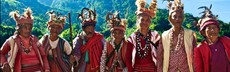
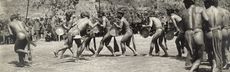
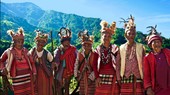
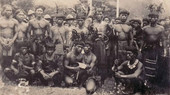
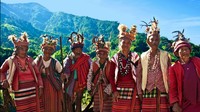
The modern terms of “Igorot” adapted from “Ygolote”, and “Cordillera”, were fashioned by the Spanish upon first contact with the highlander tribes in the 16th century. “Golot” meaning mountain range, and “I-” meaning dweller of, both Austronesian terms, come together to form “Igolot” meaning mountain people. “Igorot” is a collective term that is used to describe the multiple factions of ethnic tribes residing in the “Cordillera” (mountain ranges) in the north of the Luzon island in the archipelago of the Philippines. The original date of their arrival in the Philippines and the transition into highlander lifestyles is highly disputed and relatively unknown. Written records from the Igorot tribes are scarce.
https://spirituality.knoji.com/facts-about-the-igorots-of-the-philippines/
https://spirituality.knoji.com/facts-about-the-igorots-of-the-philippines/
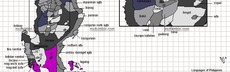
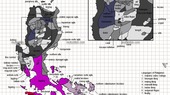
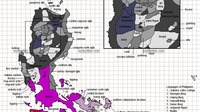
The Bontoc, Kalinga, Tingguian Itneg, and Northern Kankana-ey are groups who used some variation of the axe not only as a tool, but also as a weapon in warfare. The Ibaloi and Ifugao were studied to have used the axe as a tool only. The other tribes of the Cordillera in Northern Luzon, based on accounts from historians, missionaries, anthropologists, and travelers over the past 400 years, did not use the axe in their daily lives and likely never engaged in the practice of head-hunting.
Ethnography of the Major Ethnolinguistic Groups in the Cordillera. Quezon City, Philippines: New Day Publishers, 2003. Internet resource.
Ethnography of the Major Ethnolinguistic Groups in the Cordillera. Quezon City, Philippines: New Day Publishers, 2003. Internet resource.
Weapon of Choice
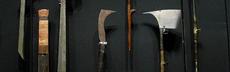
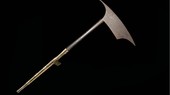
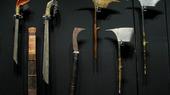
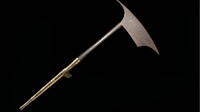
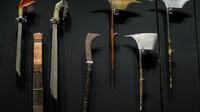
The Igorot head-axe is a weapon unique to the Philippine archipelago and comes in slightly alternating shapes. Distinguished by its wide curved edge, pointed ends, and a stub located two-thirds of the way down the shaft for grip – the weapon bears unique qualities. Non-warfare uses ranged from wood chopping and carving, meal preparation, and scaling mountain sides. Tribal blacksmiths used a dual-chambered bellows system to melt iron into a malleable form and smash the iron into the shape of an axe head.
http://www.kultofathena.com/product.asp?item=TFW016
The Igorot head-axe is a weapon unique to the Philippine archipelago and comes in slightly alternating shapes. Distinguished by its wide curved edge, pointed ends, and a stub located two-thirds of the way down the shaft for grip – the weapon bears unique qualities. Non-warfare uses ranged from wood chopping and carving, meal preparation, and scaling mountain sides. Tribal blacksmiths used a dual-chambered bellows system to melt iron into a malleable form and smash the iron into the shape of an axe head.
http://www.kultofathena.com/product.asp?item=TFW016
Head-hunting Season
“Na-ma-′ka” in Bontoc means "take heads"
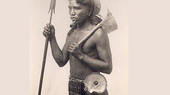
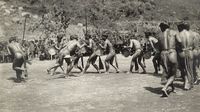
The Bontoc Igorots utilized their head-axes for the purpose of head-hunting. This common practice involved the taking of a head from the offending tribe following the death of a fellow tribesman. Not only was this regarded as an honorable ritual, head-hunting also prevailed as a sport to show a warrior’s prowess and head-axe wielding abilities.
Cawed, Carmencita. The Culture of the Bontoc Igorot. Manila: MCS Enterprises, 1972.
“Na-ma-′ka” in Bontoc means "take heads"
The Bontoc Igorots utilized their head-axes for the purpose of head-hunting. This common practice involved the taking of a head from the offending tribe following the death of a fellow tribesman. Not only was this regarded as an honorable ritual, head-hunting also prevailed as a sport to show a warrior’s prowess and head-axe wielding abilities.
Cawed, Carmencita. The Culture of the Bontoc Igorot. Manila: MCS Enterprises, 1972.
"En-fa-lok-′nĕt" in Bontoc means "War"
Rituals of War
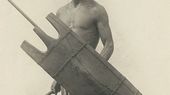
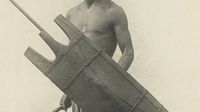
With their head-axe in hand, the warrior visits the ato (ceremonial altar) at dawn, then proceeds to the mountain on their way to mangiyag (sacred crops). As they beat their shields with the head-axe's handle, they journey to the mountains with a chick to sacrifice. Following the offering, the warrior returns to the ato near dusk. On the morning after, the ato elders secure a pig and prepare Cañao (a religious feast) in the midst of the warriors. Observing the pig’s gall bladder, the elders judge the omens before them to decide whether the hunt will be promising. Finally, the warrior travels to Mount Chumayao to retrieve the charms of the death bird ichiw. Such charms include: mitamit (death bird’s curse), fab-at (death bird’s elusiveness), facha-eg (swiftness/agility during the fight), and fafatogan nan kali nan ayayam (the bird’s signal sound). With the necessary charms (lafay) in their possession, the warrior prepares for battle.
Cawed, Carmencita. The Culture of the Bontoc Igorot. Manila: MCS Enterprises, 1972.
With their head-axe in hand, the warrior visits the ato (ceremonial altar) at dawn, then proceeds to the mountain on their way to mangiyag (sacred crops). As they beat their shields with the head-axe's handle, they journey to the mountains with a chick to sacrifice. Following the offering, the warrior returns to the ato near dusk. On the morning after, the ato elders secure a pig and prepare Cañao (a religious feast) in the midst of the warriors. Observing the pig’s gall bladder, the elders judge the omens before them to decide whether the hunt will be promising. Finally, the warrior travels to Mount Chumayao to retrieve the charms of the death bird ichiw. Such charms include: mitamit (death bird’s curse), fab-at (death bird’s elusiveness), facha-eg (swiftness/agility during the fight), and fafatogan nan kali nan ayayam (the bird’s signal sound). With the necessary charms (lafay) in their possession, the warrior prepares for battle.
Cawed, Carmencita. The Culture of the Bontoc Igorot. Manila: MCS Enterprises, 1972.
Dawn of War
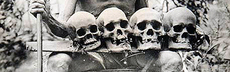
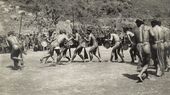
In the darkness before dawn, the warriors venture to the enemy lowlands for a surprise attack. The first offensive is the spear – thrown within 30 feet. Now awake, the opposing warriors meet their Bontoc adversaries in a battle waged with head-axes. Every fallen enemy is greeted by an immediate decapitation and their heads are placed within a Sangi (basket-weaved sack worn on the back). With the collected heads, the warriors leave as swiftly as they had arrived back to their village. At the ato, a gong is sounded off (sichacon cha). The heads are placed atop poles, cleansed, and fashioned into trophies. A chicken is sacrificed as an offering to counteract any harm enacted by the vengeful spirits of the decapitated warriors. For several days thereafter, a celebratory feast ensues, and is only ended by the absence of animals (typically carabao/water-buffalo or pig) or a retaliation by the enemy.
Cawed, Carmencita. The Culture of the Bontoc Igorot. Manila: MCS Enterprises, 1972.
http://www.youtube.com/watch?v=uw-hxRGCgeE&feature=share&fbclid=IwAR0SEoJOzUUJgE1atY5-hcqT2a4cN9TlbUJ_L-57XMrjfkvN_YOBSehnu7g
Cawed, Carmencita. The Culture of the Bontoc Igorot. Manila: MCS Enterprises, 1972.
http://www.youtube.com/watch?v=uw-hxRGCgeE&feature=share&fbclid=IwAR0SEoJOzUUJgE1atY5-hcqT2a4cN9TlbUJ_L-57XMrjfkvN_YOBSehnu7g
A traditional Bontoc song for revenge: sung by women in the night, accompanied by the mournful sound of a kalileng (nose flute). Translation of the song provided by Carmencita Cawed:
Into’y nabay gatanam
Inka't tay mid alam
Palalo ka’y kasesegang
No inka et maeesang
Inka et ta alam nan
Ta wad-ay et en kaduam
Ta adi ka maeesang
Inka et ta alam man.
---Translates to---
Why where has it gone?
Go get it
Look, you are pitiful
For you are not alone
Go get his head that got yours
So you will have companion
So you will not be alone
Go get him now.
Cawed, Carmencita. The Culture of the Bontoc Igorot. Manila: MCS Enterprises, 1972.
Inka't tay mid alam
Palalo ka’y kasesegang
No inka et maeesang
Inka et ta alam nan
Ta wad-ay et en kaduam
Ta adi ka maeesang
Inka et ta alam man.
---Translates to---
Why where has it gone?
Go get it
Look, you are pitiful
For you are not alone
Go get his head that got yours
So you will have companion
So you will not be alone
Go get him now.
Cawed, Carmencita. The Culture of the Bontoc Igorot. Manila: MCS Enterprises, 1972.
A peace-pact by a single Bontoc Igorot, claimed to be the first of its kind by the elders of Ato Lawakan of the Bontoc tribe, was forged with a long-time adversary: the Tucucan, supposedly long before foreigners came to the Cordillera. From the peak of Mount Pokis down to the hills of Samoki, a pact was made:
Sino kay impapatay
Sino kay impapatay
Anak si Ifuntok ya anak si Samoki
Nay kab-en me nan pechen ta kumawis nan fuknag
Isnan Samiyew, lengsad, sangaan ya sachag.
---Translates to---
You who is a killer
You who is a killer
Be the son of Bontoc or son of Samoki
We are making the pact that
Work in the fields in the east, north, south, and west
Will be safe again
(Again translated by Carmencita Cawed)
Cawed, Carmencita. The Culture of the Bontoc Igorot. Manila: MCS Enterprises, 1972.
Sino kay impapatay
Anak si Ifuntok ya anak si Samoki
Nay kab-en me nan pechen ta kumawis nan fuknag
Isnan Samiyew, lengsad, sangaan ya sachag.
---Translates to---
You who is a killer
You who is a killer
Be the son of Bontoc or son of Samoki
We are making the pact that
Work in the fields in the east, north, south, and west
Will be safe again
(Again translated by Carmencita Cawed)
Cawed, Carmencita. The Culture of the Bontoc Igorot. Manila: MCS Enterprises, 1972.
A Chant for Those Who Break Pacts
The pact was broken, however, and this chant followed:
Sino ka’y mamasheman
Kagkalaem nan katayam
Nisudsud nan pechen.
---Tranlslates to---
You who is benighted
You are looking for your death
The pact is broken.
-Translated by Carmencita Cawed
Cawed, Carmencita. The Culture of the Bontoc Igorot. Manila: MCS Enterprises, 1972.
Sino ka’y mamasheman
Kagkalaem nan katayam
Nisudsud nan pechen.
---Tranlslates to---
You who is benighted
You are looking for your death
The pact is broken.
-Translated by Carmencita Cawed
Cawed, Carmencita. The Culture of the Bontoc Igorot. Manila: MCS Enterprises, 1972.
Resistance: Spanish Colonization
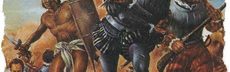
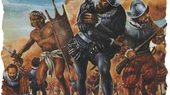
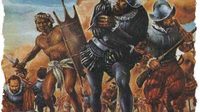
Over the 350 years that the Spanish conquered and subdued the peoples living in the lowlands, never had they fully brought to heel the Igorot tribes living in the northern part of the Isle of Luzon in the cordilleras. While the lowlanders were willingly converting to Christianity and adopting European forms of agriculture and society, the Igorot highlanders held strong to their pagan beliefs and annihilated multiple Spanish military expeditions seeking gold and subjugation, solidifying their independence and unwavering preservation even at the cost of living in comfort. They often had to retreat to even higher mountainous terrain to evade capture after their homes and centers of worship were burned by Spaniards. Headhunting also proved to be a threatening gesture that repelled many Conquistadors and missionaries from venturing too far into the mountains.
Scott, William Henry. The Igorot Struggle for Independence. Quezon City, Philippines: Malaya Books, 1971.
Scott, William Henry. The Igorot Struggle for Independence. Quezon City, Philippines: Malaya Books, 1971.
Spanish Frustration & Igorot Resilience
Even before the axe and other iron-based weapons came to be prominent features in the Igorot arsenal, the Igorot tribes still managed to defend their lands from Spanish Conquistadors. They instead often implemented ambush tactics with bamboo lances and wooden stakes planted in the ground, false retreats and surrenders to catch their enemies off-guard, and “blockades of trees and branches in mountain passes where they could roll down big stones and tree trunks” (pg. 8).
Secrets about their trails, gold mines, and villages were maintained through the careful selection of traders that visited the lowlands. “Governor Primo de Rivera - “It is certainly humiliating for Spain and her government at home and abroad, to realize that thousands of human beings, some at the very doorway of the capital, and many others within sight of Christian towns with government forces and authorities, not only live in pre-Conquest backwardness, but commit crimes even to the extent of collecting tribute from the Christian towns themselves without receiving any punishment for their boldness” (pg. 2)
“The pagans of Tonglo, for example, told the idol-smashing friar who came to convert them, “It’s no easier for the people to give up their ancient practices for the word of a priest, than for him to give up what he believes.” And their pagan priestess told him, “If you’re the priest of the Christians, so am I of the Igorots, and if you have your God, I have mine” (pg. 8).
Quotes from William Henry Scott - “The Igorot Struggle for Independence”
Scott, William Henry. The Igorot Struggle for Independence. Quezon City, Philippines: Malaya Books, 1971.
Secrets about their trails, gold mines, and villages were maintained through the careful selection of traders that visited the lowlands. “Governor Primo de Rivera - “It is certainly humiliating for Spain and her government at home and abroad, to realize that thousands of human beings, some at the very doorway of the capital, and many others within sight of Christian towns with government forces and authorities, not only live in pre-Conquest backwardness, but commit crimes even to the extent of collecting tribute from the Christian towns themselves without receiving any punishment for their boldness” (pg. 2)
“The pagans of Tonglo, for example, told the idol-smashing friar who came to convert them, “It’s no easier for the people to give up their ancient practices for the word of a priest, than for him to give up what he believes.” And their pagan priestess told him, “If you’re the priest of the Christians, so am I of the Igorots, and if you have your God, I have mine” (pg. 8).
Quotes from William Henry Scott - “The Igorot Struggle for Independence”
Scott, William Henry. The Igorot Struggle for Independence. Quezon City, Philippines: Malaya Books, 1971.
Spanish-American & Philippine-American Wars
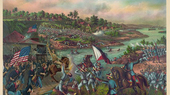
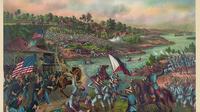
A royal decree in 1881 by the Spanish-led government called for the highlanders to come down from the mountains and live in the lowlands, but this was heavily protested by the Bontoc peoples. Uprisings began against the Spanish authorities. Spanish soldiers were met with axes and spears, and their garrisons were burned to ashes. Government authorities retaliated by burning down Bontoc villages with the help of enemy tribes, but the Bontoc people could not be fully subjected. More uprisings, in allegiance with their lowland brothers against the Spanish, erupted across the Philippines in 1896. With the aid of the U.S. military, the Spanish regime in the Philippines finally met their end with the culmination of the Spanish-American War in 1898. The Philippine-American War soon followed, culminating with the disestablishment of the Catholic Church in the Philippines and the establishment of a secular government modeled after the United States in 1902. Modern amenities, a novel government, new means of education, Anglo-Christian missionaries, and the continued exploitation of their natural resources (gold and timber) by a new colonizing power (U.S.) forever changed the Bontoc way of life. The Philippines would not gain their independence until 1946.
Scott, William Henry. The Igorot Struggle for Independence. Quezon City, Philippines: Malaya Books, 1971.
Scott, William Henry. The Igorot Struggle for Independence. Quezon City, Philippines: Malaya Books, 1971.
Igorots in WWII
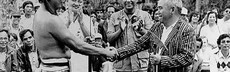
"Many desperate acts of courage and heroism have fallen under my observation on many fields of battle in many parts of the world. I have seen forlorn hopes become realities. I have seen last-ditch stands, and innumerable acts of personal heroism that defy description. But for sheer breathtaking and heart-stopping desperation, I have never known the equal of those Igorots riding the tanks. Gentlemen, when you tell the story, stand in tribute to those gallant Igorots. As members of the Philippine commonwealth, they have proved to be excellent fighting men." -General MacArthur
Information gathered from a communique describing a retaliatory effort against occupying Japanese forces (20th Japanese Infantry Regiment) by Igorot tribesmen and American tanks in the Bataan Peninsula is recalled in the Pittsburgh Post-Gazette Volume 15-No. 177 issued on February 23rd, 1942.
http://sagada-igorot.blogspot.com/2009/04/general-macarthur-praised-igorot-wwii.html?m=1&fbclid=IwAR0jXnlInfCWFQneKnKZnXrv1AFdQONUB-Y2rMflMEW-T_7GzPcHbuPNz4Q
Information gathered from a communique describing a retaliatory effort against occupying Japanese forces (20th Japanese Infantry Regiment) by Igorot tribesmen and American tanks in the Bataan Peninsula is recalled in the Pittsburgh Post-Gazette Volume 15-No. 177 issued on February 23rd, 1942.
http://sagada-igorot.blogspot.com/2009/04/general-macarthur-praised-igorot-wwii.html?m=1&fbclid=IwAR0jXnlInfCWFQneKnKZnXrv1AFdQONUB-Y2rMflMEW-T_7GzPcHbuPNz4Q
Igorot Victory
In regards to the continued onslaught of Japanese forces by American troops, the journal recounts that “More than 300,000 Filipino guerillas assisted the army in this task. They gathered intelligence, ambushed enemy soldiers, and mopped up remnants of the Japanese forces” (p. 547). Fighting on the island of Luzon continued until the formal surrender of Japan in August 1945 following the dropping of the atomic bombs on Hiroshima and Nagasaki. Japanese General Tomoyuki Yamashita, the general assigned by the emperor to defend the Philippines failed in his task, compromised by Americans, Filipinos, and Igorots alike.
Igorots are commended to this day for their bravery in driving out the occupying Japanese forces. The threat of beheadings, torture, and the forced digging of their own graves ordered by Japanese soldiers did not deter the Igorots in defense of their lands. An estimated 900,000 civilians and 57,000 soldiers from the Philippines lost their lives during the war – a majority due to the atrocities (including the rape, pillaging, and massacre of hundreds of thousands) committed by the Japanese.
Quotation gathered from The Oxford Companion to American Military History (1999) edited by John Whiteclay Chambers II
https://books.google.com/books?id=_Rzy_yNMKbcC&lpg=PA547&dq=guerrilla%20Philippine%20liberation%20fighting%20Japanese&pg=PA547#v=onepage&q&f=false
https://ww2db.com/country/Philippines
Igorots are commended to this day for their bravery in driving out the occupying Japanese forces. The threat of beheadings, torture, and the forced digging of their own graves ordered by Japanese soldiers did not deter the Igorots in defense of their lands. An estimated 900,000 civilians and 57,000 soldiers from the Philippines lost their lives during the war – a majority due to the atrocities (including the rape, pillaging, and massacre of hundreds of thousands) committed by the Japanese.
Quotation gathered from The Oxford Companion to American Military History (1999) edited by John Whiteclay Chambers II
https://books.google.com/books?id=_Rzy_yNMKbcC&lpg=PA547&dq=guerrilla%20Philippine%20liberation%20fighting%20Japanese&pg=PA547#v=onepage&q&f=false
https://ww2db.com/country/Philippines
Bontoc Igorots of Today
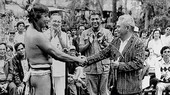
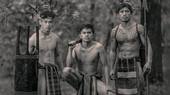
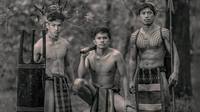
Headhunting is no longer practiced by the Bontoc peoples, largely due to the introduction of Christianity. Pacts of peace are still being upheld in the region with their neighbors and the head-axe is no longer utilized for warfare. Instead, it is mostly used for ceremonial purposes. Wooden skulls are used to mimic the old celebrations in place of real skulls.
(c)Adrian Dungo
Cawed, Carmencita. The Culture of the Bontoc Igorot. Manila: MCS Enterprises, 1972.
(c)Adrian Dungo
Cawed, Carmencita. The Culture of the Bontoc Igorot. Manila: MCS Enterprises, 1972.
References
-Cawed, Carmencita. The Culture of the Bontoc Igorot. Manila: MCS Enterprises, 1972.
-Ethnography of the Major Ethnolinguistic Groups in the Cordillera. Quezon City, Philippines: New Day Publishers, 2003. Internet resource.
-Scott, William Henry. The Igorot Struggle for Independence. Quezon City, Philippines: Malaya Books, 1971.
https://spirituality.knoji.com/facts-about-the-igorots-of-the-philippines/
https://www.jstor.org/stable/42633435?seq=1#page_scan_tab_contents
http://oer2go.org/mods/en-boundless/www.boundless.com/u-s-history/textbooks/boundless-u-s-history-textbook/the-gilded-age-1870-1900-20/american-imperialism-164/the-philippine-american-war-903-3411/index.html
http://sagada-igorot.blogspot.com/2009/04/general-macarthur-praised-igorot-wwii.html?m=1
https://hubpages.com/literature/headhunters-of-the-cordilleras#
https://warfarehistorynetwork.com/daily/wwii/guerrilla-war-on-luzon-during-world-war-ii/
https://books.google.com/books?id=_Rzy_yNMKbcC&lpg=PA547&dq=guerrilla%20Philippine%20liberation%20fighting%20Japanese&pg=PA547#v=onepage&q&f=false
https://globalnation.inquirer.net/99054/february-1945-the-rape-of-manila
https://news.google.com/newspapers?id=VtgNAAAAIBAJ&sjid=BmoDAAAAIBAJ&pg=5542,3340029&dq=igorot
http://www.vikingsword.com/vb/showthread.php?t=7438
https://ww2db.com/country/Philippines
http://www.kultofathena.com/product.asp?item=TFW016
-Ethnography of the Major Ethnolinguistic Groups in the Cordillera. Quezon City, Philippines: New Day Publishers, 2003. Internet resource.
-Scott, William Henry. The Igorot Struggle for Independence. Quezon City, Philippines: Malaya Books, 1971.
https://spirituality.knoji.com/facts-about-the-igorots-of-the-philippines/
https://www.jstor.org/stable/42633435?seq=1#page_scan_tab_contents
http://oer2go.org/mods/en-boundless/www.boundless.com/u-s-history/textbooks/boundless-u-s-history-textbook/the-gilded-age-1870-1900-20/american-imperialism-164/the-philippine-american-war-903-3411/index.html
http://sagada-igorot.blogspot.com/2009/04/general-macarthur-praised-igorot-wwii.html?m=1
https://hubpages.com/literature/headhunters-of-the-cordilleras#
https://warfarehistorynetwork.com/daily/wwii/guerrilla-war-on-luzon-during-world-war-ii/
https://books.google.com/books?id=_Rzy_yNMKbcC&lpg=PA547&dq=guerrilla%20Philippine%20liberation%20fighting%20Japanese&pg=PA547#v=onepage&q&f=false
https://globalnation.inquirer.net/99054/february-1945-the-rape-of-manila
https://news.google.com/newspapers?id=VtgNAAAAIBAJ&sjid=BmoDAAAAIBAJ&pg=5542,3340029&dq=igorot
http://www.vikingsword.com/vb/showthread.php?t=7438
https://ww2db.com/country/Philippines
http://www.kultofathena.com/product.asp?item=TFW016
Scroll down to continue
Swipe to continue
Swipe to continue
















 The Head Axe: A Study of the Bontoc Igorots and Their Warfare
 Who are the Igorots?
 Linguistics and Cultural Relatives






 References