
Intro.
Spirits of the Home: Material Culture and Cultural Maintenance in a Diaspora CommunityBy: Thomas Phetmeuangmay
Notions of Spirits
Notions of Spirits and SpitirualityAnimism
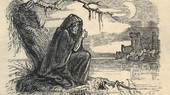
Animism is a term used
to describe the belief system of many older or more periphery religious systems
and their emphasis on nature, spirituality, and the connectivity of the
physical and meta-physical realms. Animistic beliefs attribute objects, places,
and ideas with spiritualistic powers and connections. The term was coined by
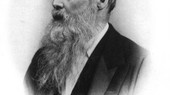
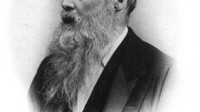
English anthropologist, Edward Tylor (1832-1917) in the 19th century and used
it to describe the religious beliefs of many of the U.K.'s colonized peoples.
Tylor believed that animism was the foundation from which all religious would
be born from, arguing that the pseudo-scientific, spiritualistic approach to
analyzing the world was what would set the ground-work for organized religions
after on (Havey, 2005). with this approach, Tylor issued impartial terminology
that was outside the norm of colonial anthropology at the time, and is
accounted for considering colonized people and colonizers to share no real
difference except for location and pre-disposition, hence why
"animism" is considered to be an impartial word for the field of
study (Stringer, 1999).
Animism in Lao Peoples
For many people across the globe, and the Lao ethnic groups (for my research I consider all ethnic groups that currently reside in the Lao Peoples' Democratic Republic (LPDR) to be a part of the Lao community and canon), animistic faiths were the first belief systems used in order to better understand the world. For the Lao peoples, the first belief systems focused around the connection between the physical realm and metaphysical and emphasized the importance of the two worlds working together to support one another. For early Lao peoples, and other groups of early Southeast Asia, this took the form of ancestor worship and a religious approach to the natural world and required specific ritual practices that maintain that relationship. Spirits (phi) were not regulated to just the ancestors but to notions of the natural world; this led to a diverse pantheon of spirits and "gods" (or beings that possessed god-like abilities or authority) that had a direct, perceived connection to each individual and required particular behaviorisms of that person in order to maintain the order of the natural world. Sadly, many of these practices have been either lost to history or were hybridized with Brahmanical faiths (Hinduism and Buddhism) caused by the Indianization of the region.
Animism in the Lao Home
For the Lao peoples, animisim was closely realted to the sanctity of one's abode and required rituals to both protect the home and appease the spirits of teh ancestors of the spirits of the natural and unnatural worlds. Not dissimilar to some beliefs in the Celtic-Anglo sphere, where people worried about appeasing brownies (house spirits) in Scottish homes and keeping the banshee (death spirit) at bay in Ireland are still prevalent in those societies today. However, the Lao people had their own diverse colelction of spirits, each with a speicifc purposes or powers; both malevolent and benign. For example, an anceient spirit known as the phi ka was reputed to be a liver-eating spiirt that saught out Lao people in the night to consume their livers and leave them dead. And this particular ghoul is still alive and well in the minds of contemporary Lao-communities both in the homeland and abroad (Muecke, 1987). To appease these spirits Lao people had to perform rituals and daily activites in order to sustain the balance, and many of these practices became intertwined with notions of merit making and in Buddhism. For example, many Lao families still possess spirits houses for the housing of the ancestors as well as the Buddha and make offerings to them, keeping an ancient tradition alive and well.
Dissolving of Belief
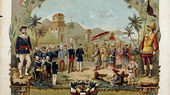
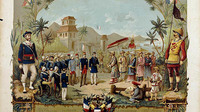
Following the French
victory in the Sino-French war of 1884-85, France would be largely uncontested
in its conquest of Indochina. With the French occupation of the Lao kingdoms
(fully consolidating French power across the kingdoms in 1893) along came the
imposition of Christian ideas and traditions and the subversion of
"savage" belief systems. French Catholicism became the institutional
religion of Laos (as well as the French Empire as a whole) and was widely promoted
across their domain.
Practice in Plain view
Despite Catholic
coercion and French other-ization of Lao traditions and norms, some practices
of animism found refuge in Buddhist practices which enabled some form of
cultural maintenance. Lao people could use their notions of Lao-Buddhism to
resist identity change and sustain the old ways of life in the face of colonial
powers. This can be seen in how Lao peoples maintain spirits house and
attribute divine powers to everyday items of their heritage. For example,
pendants and medallions that have the faces of royalty are said to bring good
luck and fortune since they are attached to spirit of the king or how items
that are attached to particular ancestor possess residual merit and fortune
that could be passed from generation to generation (Evans, 1998). While not
Buddhist, its historical relationship to Buddhism in Laos, allowed it and other
"less-noticeable" practices to slip into the periphery and not be
attacked by the colonial regime as more flamboyant practices of animal
sacrifice and notions of shamanism.
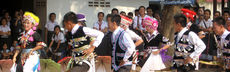
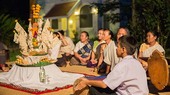
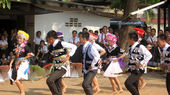
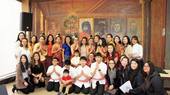
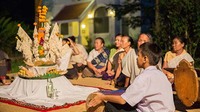
Practices such as the baci ceremonies (shown in the background image; a pre-Buddhist ceremony that connects the 32 spirits and organs and meant to bring good wealth and good fortune; involves communal string tying to wrists and celebrations) -ceremonies attached to the idea of community and connectivity between people living and passed- and certain traditions attached to other celebrations possess these ancestral practices associated with animism and are enabled to exist in the contemporary world via this hybridization of animism and Buddhism. Another example of this would be the themes of cleansing and renewal associated with the Lao-Thai New Year celebrations and the use of water to cleanse ourselves and others for the year ahead.
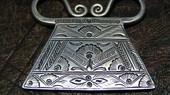
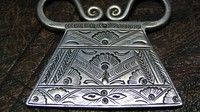
Another example of this is how Lao communities still use spirits bells to both draw in protector spirits and to keep bad spirits away, under the guise that its for the children's protection rather than the protection of the community. This shows not only the maintenance of animistic practices but also the evolution of how these practices are perceived by Lao-communities of today (Meunekithirath, 2019). These items and practices that Lao-people have had for millennium are prime examples of material culture that illustrate the evolution of animistic beliefs.
Practices such as the baci ceremonies (shown in the background image; a pre-Buddhist ceremony that connects the 32 spirits and organs and meant to bring good wealth and good fortune; involves communal string tying to wrists and celebrations) -ceremonies attached to the idea of community and connectivity between people living and passed- and certain traditions attached to other celebrations possess these ancestral practices associated with animism and are enabled to exist in the contemporary world via this hybridization of animism and Buddhism. Another example of this would be the themes of cleansing and renewal associated with the Lao-Thai New Year celebrations and the use of water to cleanse ourselves and others for the year ahead.
Another example of this is how Lao communities still use spirits bells to both draw in protector spirits and to keep bad spirits away, under the guise that its for the children's protection rather than the protection of the community. This shows not only the maintenance of animistic practices but also the evolution of how these practices are perceived by Lao-communities of today (Meunekithirath, 2019). These items and practices that Lao-people have had for millennium are prime examples of material culture that illustrate the evolution of animistic beliefs.
Things we've always had
By possessing these items and notions, the Lao people have been able to
upkeep a material culture that has reference to the notions of animism that is
still being produced to this day. Contemporary Lao communities have access to
specialized craftsmen that produce these sacred items and keep the practices
alive and well. In turn notions of spirits and peoples’ connection to the
spiritual side of the physical world. While the materials used to make spirit
locks and bells in the U.S. come from different sources than the ones of the
homeland, some say the power of the items is dwindled by its lack of connection
to the ancestral home. However, despite the Lao-communities abroad being
abroad, they also believe that the homeland comes with them, in a sense, to
these "new worlds," exemplified by how Lao diaspora communities
retain spirit paranoia and fear bad spirits from the homeland have followed
them to their new abodes, especially the phi ka when numbers
of Lao people seemed to have dropped dead well answering the phone. Not only do
these cases show the relevance of these beliefs, but also their integration
into the modern world and how these spirits adapt to the world around them,
making them feel all the more real and powerful (Muecke, 1987).
The Integration of Material Culture
With the movement of
peoples and their material culture, these items and places take on new forms to
better a situate to their new surroundings. Diaspora hubs, such as Elgin,
Illinois, have many sites of cultural relevancy such as grocery stores, Wats,
and other structures of Lao identity and behaviorisms. The picture in the
background was taken at the Golden Market in Elgin, where not only Lao, but
many Southeast Asian peoples come to get food, household, and religious items
that harken back to the homeland. Items such as incense, for ceremonies, and
structures for spirit houses proliferated the stores aisles and demonstrates
how active these beliefs are in the contemporary.
This is not uncommon among diasporic groups and ethnic hubs of other groups, whom also shape their new environments via businesses and places that allow for these groups to participate in cultural maintenance and continue the knowledge of their homelands in these new spaces.
This is not uncommon among diasporic groups and ethnic hubs of other groups, whom also shape their new environments via businesses and places that allow for these groups to participate in cultural maintenance and continue the knowledge of their homelands in these new spaces.
From Home to Here...The Interviews
The interviews that I conducted alongside this research strengths the
arguments that I came across within the academic literature: that while the
continuation of some animistic practices is maintained via different
Lao-Buddhist ceremonies and oral traditions that parents pass down through the
generations. However, despite groups keeping some of the traditions alive, as
with all cultures, generational gaps have appeared where younger people can
lose interest in the subject matter or become disenfranchised with their
ancestral heritage; yet according to one of my interviewees, she has noticed a
revival in interest and participation within the Elgin Lao community and
"has hope" that they will continue on our traditions and fight more
for cultural maintenance and retention of ancestral identity (Meunekithirath,
2019). From here the "routine" ritual behaviors take on a role of
cultural maintenance in a time of identity politics and neo-tribalism, adding
to the prerogative of Lao-peoples to upkeep the old ways and retain their
attachment to their heritage.
My Background
While some of the traditions have been maintained and strong connections
between the Lao-people and the rituals of the past have lasted the ages,
modernity has had its effect on tradition and possess a great threat for the
maintenance of more traditional life-ways. Especially for communities that are
in foreign lands, acculturation erodes the efforts of cultural maintenance and
the balance between new ways of life and the old play out in both micro- and
macro-scales, however Muecke argues that Lao communities possess an unyielding
strength and powerful sense of communal bonds that enable it to be more adept
at cultural maintenance than other diasporic communities (Muecke, 1987:
287-89).
For the Lao in America, and Elgin in particular, these strong bonds and renewed appreciation for the old ways, illustrate a picture of a strong people continuing their traditions despite adversary and modernity form now and years to come.
For the Lao in America, and Elgin in particular, these strong bonds and renewed appreciation for the old ways, illustrate a picture of a strong people continuing their traditions despite adversary and modernity form now and years to come.
What can be deduced
While some of the traditions have been maintained and strong connections between the Lao-people and the rituals of the past have lasted the ages, modernity has had its affect on tradition and possess a great threat for the maintenance of more traditional life-ways. Especially for communities that are in foreign lands, acculturation erodes the efforts of cultural maintenance and the balance between new ways of life and the old play out in both micro- and macro-scales, however Muecke agrues that Lao communities posses an unyeilding strength and powerful sense of ciommunal bonds that enable it to be more adept at cultural maintenance than other diasporic communities (Muecke, 1987: 287-89).
For the Lao in America, and Elgin in particular, these strong bonds and renewed appreciation for the old ways, illustrate a picture of a strong people continuing their traditions despite adversary and modernity form now and years to come.
For the Lao in America, and Elgin in particular, these strong bonds and renewed appreciation for the old ways, illustrate a picture of a strong people continuing their traditions despite adversary and modernity form now and years to come.
Works Cited
Evans, Grant.The Politics of Ritual and Remembrance: Laos since 1975.
Honolulu: University of Hawaiʻi Press,
1998. Accesssed October 10th, 2018.
Harvey, Graham, 2005. Animism: Respecting the Living World. London: Hurst & Co. ISBN 978-0-231-13701-0. Accessed April 2nd, 2019.
Meunekithirath, Jasmine. Interviewed by Thomas Phetmeuangmay. Personal communication. Founders memorial Library. April 4th, 2019.
Muecke, Marjorie A. "Resettled Refugees' Reconstruction of Identity: Lao In Seattle." Urban Anthropology and Studies of Cultural Systems and World Economic Development 16, no. 3/4 (1987): 273-89. http://www.jstor.org/stable/40553108. Accessed, January 15th, 2019.
Stringer, Martin D., 1999. "Rethinking Animism: Thoughts from the Infancy of our Discipline". Journal of the Royal Anthropological Institute. 5(4): 541–56. doi:10.2307/2661147. Accessed April 2nd, 2019.
Harvey, Graham, 2005. Animism: Respecting the Living World. London: Hurst & Co. ISBN 978-0-231-13701-0. Accessed April 2nd, 2019.
Meunekithirath, Jasmine. Interviewed by Thomas Phetmeuangmay. Personal communication. Founders memorial Library. April 4th, 2019.
Muecke, Marjorie A. "Resettled Refugees' Reconstruction of Identity: Lao In Seattle." Urban Anthropology and Studies of Cultural Systems and World Economic Development 16, no. 3/4 (1987): 273-89. http://www.jstor.org/stable/40553108. Accessed, January 15th, 2019.
Stringer, Martin D., 1999. "Rethinking Animism: Thoughts from the Infancy of our Discipline". Journal of the Royal Anthropological Institute. 5(4): 541–56. doi:10.2307/2661147. Accessed April 2nd, 2019.
Further Readings
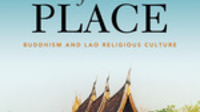
Holt, John Clifford. Spirits of the Place: Buddhism and Lao Religious Culture. University of Hawai'i Press, 2009. http://www.jstor.org/stable/j.ctt6wqx0n
Phetmeuangmay, Thomas J., 2018. 'Moon Over the Mekong: An analysis of the History of the use of Buddhism as a tool for Nationalism in the Lao Peoples Democratic Republic.' Paper presented to the NIU 2019 Southeast Asian Studies Student conference, held at Swen Parson Hall on March 29th, 2019.
Phetmeuangmay, Thomas J., 2018. 'Moon Over the Mekong: An analysis of the History of the use of Buddhism as a tool for Nationalism in the Lao Peoples Democratic Republic.' Paper presented to the NIU 2019 Southeast Asian Studies Student conference, held at Swen Parson Hall on March 29th, 2019.
Scrollen, um weiterzulesen
Wischen, um weiterzulesen
Wischen, um Text einzublenden
















 Spirits of the Home: Material Culture and Cultural Maintenance in a Diaspora Community
 Notions of Spirits and Spitiruality
 Animism in Lao Peoples
 Animism in the Lao Home
 Dissolving of Belief
 Practice in Plain view
 Things we've always had
 The Integration of Material Culture
 The Interviews
 My Background
 What can be deduced
 Works Cited
 Further Readings