
Cambodian Khon Masks
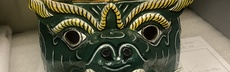
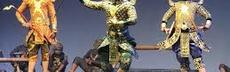
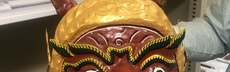
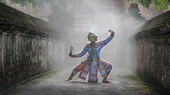
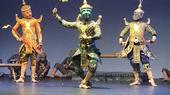
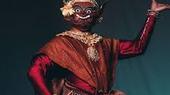
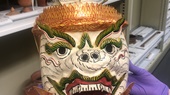
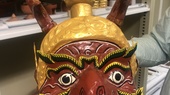
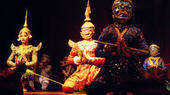
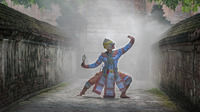
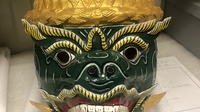
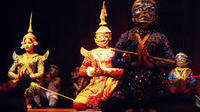
Khon masks are used by lakhon khol dancers when performing an Indian epic called Reamker. This traditional dance theater is thought to date back to the 12th century in Angkor Wat. The first lakhon khol dance troupes were formed under the rule of King Ang Duong in the 18th century. He had a lakhon khol dance troupe consisting of all males along with his other court dancers and entertainers. The art of making khon masks and the theater of lakhon khol almost did not survive the genocidal rule of the Khmer Rouge. Lakhon khol is now listed by UNESCO as an intangible cultural heritage of Cambodia (Lach 2019).
History of Lakhon Khol
King Ang Duong had a troupe consisting of all males along with his other court dancers who were typically novice monks acting out manuscripts. This style of court dancing vanished when King Ang Duong died and was later brought back in surrounding villages (Lach 2019). It is a rare occurrence in Southeast Asia for a court tradition to be transported from the King’s palace to the surrounding villages (Anon 2018). Once it was discovered that villagers had continued on in Lakhon Khol theater, the villagers troupes would occasionally be asked to perform for the court. Before the Khmer Rouge came into power, there were 8 male dance troupes in Cambodia. Unfortunately, only 1 dance group survived the war and this troupe is still active in the village Svay Andet located across the Mekong River from Phnom Penh (Anon 2018).
Khmer Rouge
The Khmer Rouge came to power after a grueling 5 year civil war in Cambodia in 1975 and was based on extreme Maoism. The communist group opposed education and religion and also banned traditional arts and writing. Art was considered decadent and was a punishable crime. Therefore, the Khmer Rouge banned the study of masked dance. Over 1.7million people died from overwork, starvation, disease, execution, and torture during this time (Taylor 2014). The lakhon khol tradition almost disappeared completely and the tradition of the masked dance almost destroyed. A handful of brave dancers held onto the tradition in secret to pass on to younger generations so that the tradition of lakhon khol would continue on (Lach 2019).
Svay Andet
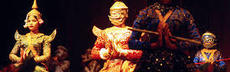
The Svay Andet is an all male lakhon khol dance troupe that typically performs for special events like the New Year celebration in April and other special holidays. They have maintained the deep ritual meaning behind Reamker as well as adding some magical functions. The members of this dance group consist of farmers and villagers from the local community and surrounding villages. Svay Andet concentrates more on the battle scenes between the monkeys and demons than the original court dance troupes did (Lach 2019). Each dance troupe today has a slightly different way of interpreting Reamker and that helps make each performance unique.
Lakhon Khol Today
As stated previously, Reamker is an epic where a prince rescues his wife from a demon with the help of an army of monkeys. In the 20th century there have been attempts to reform lakhon khol to appeal to modern times and foreign audiences to encourage more people to view the form of dance and the tradition of the lakhon khol performance. Reamker originally was never performed as a whole when executed in court but now is when performed for large groups of people and it can last several hours. Also, now both men and women perform in the dance troupes (Voa 2019). The main heroes are Preah Ream, who represents Vishnu, and Preah Lek and they are performed by female dancers due to lack of male dancers after the war reduced the population of Cambodia by almost 1/4 (Anon 2017).
References
https://disco.teak.fi/asia/lakhon-khol-2/
https://www.reuters.com/article/us-heritage-drama/masked-dance-tradition-rises-from-near-extinction-in-cambodia-idUSKCN1OY00P
https://learningenglish.voanews.com/a/tradition-of-masked-dancers-lives-on-in-cambodia/4732505.html
https://www.bangkokpost.com/news/general/1584418/un-lists-khon-dance-as-cambodian-heritage
https://www.maskmuseum.org/mask/cambodia-hanuman/
http://www.leisurecambodia.com/news/detail.php?id=102
http://sites.asiasociety.org/dancecambodia/reamker.htm
http://www.angelfire.com/art/apsarakhmer/lakhon_khol.htm
https://www.washingtonpost.com/news/worldviews/wp/2014/08/07/why-the-world-should-not-forget-khmer-rouge-and-the-killing-fields-of-cambodia/?noredirect=on&utm_term=.13797f5c5c67
https://www.reuters.com/article/us-heritage-drama/masked-dance-tradition-rises-from-near-extinction-in-cambodia-idUSKCN1OY00P
https://learningenglish.voanews.com/a/tradition-of-masked-dancers-lives-on-in-cambodia/4732505.html
https://www.bangkokpost.com/news/general/1584418/un-lists-khon-dance-as-cambodian-heritage
https://www.maskmuseum.org/mask/cambodia-hanuman/
http://www.leisurecambodia.com/news/detail.php?id=102
http://sites.asiasociety.org/dancecambodia/reamker.htm
http://www.angelfire.com/art/apsarakhmer/lakhon_khol.htm
https://www.washingtonpost.com/news/worldviews/wp/2014/08/07/why-the-world-should-not-forget-khmer-rouge-and-the-killing-fields-of-cambodia/?noredirect=on&utm_term=.13797f5c5c67
Scrollen, um weiterzulesen
Wischen, um weiterzulesen
Wischen, um Text einzublenden






 Cambodian Khon Masks
 History of Lakhon Khol
 Khmer Rouge
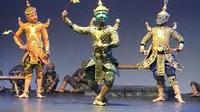 Svay Andet
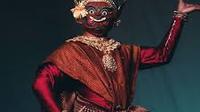 Lakhon Khol Cambodian Theater
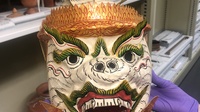 Khon Masks
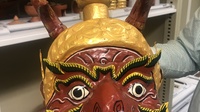 Lakhon Khol Today
 References