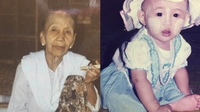
Thanakha and Modern Myanmar Society
Presented by
Mr. Naing Aung
Ms. Su Sandy Htay
Ms. Hsu Mon Thant
Ms. Sandar Soe San
Mr. Naing Aung
Ms. Su Sandy Htay
Ms. Hsu Mon Thant
Ms. Sandar Soe San
Introduction
Thankha is a traditional cosmetic of Myanmar people. It has been used by Myanmar people for over 2000 years. Thanakha has distinct value and rooted in Myanmar society and an industry is evolved around it.
The purpose of study
The objective of this study is to examine the customs, beliefs, changes and identities about Thanakha in Myanmar society and a snapshot of its economy.
As our study will show thanakha and Myanmar women define and redefine each other. Wearing Thanakha would even said to be an important identity maker for Myanmar women.
Our study highlights the little-changed position of Thankha but shows the changning ways of using Thankha.
As our study will show thanakha and Myanmar women define and redefine each other. Wearing Thanakha would even said to be an important identity maker for Myanmar women.
Our study highlights the little-changed position of Thankha but shows the changning ways of using Thankha.
Thanakha and modenity
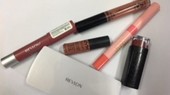
The threat of modern cosmetic
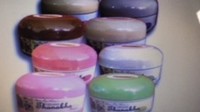
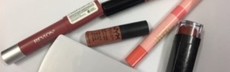
Myanmar advertisements on beauty products on media and billboards in Myanmar and seem to suggest that modern cosmetics are posing a great threat to Thanakha. Our study show that it will take a while to end the use of Thanakha.
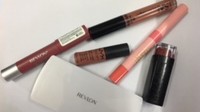
The use of modern cosmetics
The useage of Thanakha has became more sophisticated overtime.
According to one of the interviwer, Myanmar women mostly wear make-up
whenever they go to the ceremonies though they wear thanakha on ordinary days.
According to one of the interviwer, Myanmar women mostly wear make-up
whenever they go to the ceremonies though they wear thanakha on ordinary days.
Thanakha and Economy
Original Thanakha and its Market
Our study shows that thanakha is still receiving great demand in market.
Despite of ready-made thanakha, cosmetics made of thanakha and modern
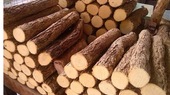
cosmetics, people are still using thanakha bark. According to our findings, thanakha
bark gains more demand than ready-made thanakha does in the market. In
addition, not only elder women but young girls still prefer thanakha bark.
Perhaps, this is largely motivated by their outlook on thanakha and their
suspicions about ready-made, as aforementioned. Moreover, our study shows that
ready-made thanakha is produced by the wish of businessmen rather than in
accordance with the customers demand.
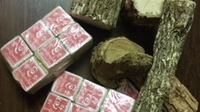
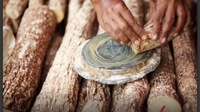
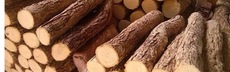
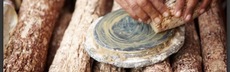
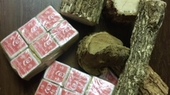
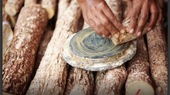
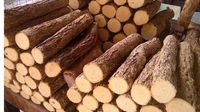
This original type is prefer not only by the local but also by the foreigners. By the saying of one of the interviewees, Daw Than Than Khine who runs the Thanakha shop, the foreigners sometimes brought thanakha bark and kyouk pyin (stone slab) as souvenir of Myanmar.
This original type is prefer not only by the local but also by the foreigners. By the saying of one of the interviewees, Daw Than Than Khine who runs the Thanakha shop, the foreigners sometimes brought thanakha bark and kyouk pyin (stone slab) as souvenir of Myanmar.
Ready-made Thanakha
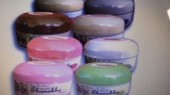
Nowadays, the modern cosmetic industries produce ready-made products made of thanakha.
According to two interviewees namely, Phyu Sin Khine and Mya Pwint Nu,who are university students, the consumers prefer the oiginal one since the ready-made contain some chemicals.Despite these ready-made products are produce, the consumers still demand the traditional thanakha bark.
According to two interviewees namely, Phyu Sin Khine and Mya Pwint Nu,who are university students, the consumers prefer the oiginal one since the ready-made contain some chemicals.Despite these ready-made products are produce, the consumers still demand the traditional thanakha bark.
Thanakha and Gender
Thanakha and Children
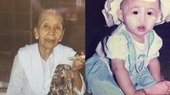
Thankha is mainly concerned with women. According to our study, there are traditional beliefs and customs on Thanakha and women. All Myanmar children have wear Thanakha in their childhood. Parents apply Thanakha paste circle, square or even rabbit head and erected ears on their cheeks, foreheads and noses. They even treat Thankha to their children because they believed that it cools their abnormal. The main reason for having their children applied Thanakha is for beauty; they thought that children are cute only wearing Thanakha and taught their children not to live without wearing Thanakha. However, in the adulthood, it seems to be that Thanakha is more concerned with women than men.
Thanakha and Women
Thankha is mainly concerned with women. According to our study, there
are traditional beliefs and customs on Thanakha and women.
According to our findings, Myanmar women are traditionally taught by their forefathers that women should wear Thanakha and should not live without wearing it. They condemned the face of women without Thanakha as grief stricken face. They thought Thanakha as a symbol of neatness and cleanness. Thanakha is likely to be the object that must be concerned with women. But, according to a custom, women must avoid wearing Thanakha in funeral ceremonies. This practice is still surviving. Other notable custom is that when a woman gets married, her parents had to give their Thanakha Kyauk Pyin to her. Thanakha, therefore, seems to be a blessing to Myanmar women. Despite of these teachings and customs, Myanmar women are not involuntarily wearing Thanakha.
According to our findings, Myanmar women are traditionally taught by their forefathers that women should wear Thanakha and should not live without wearing it. They condemned the face of women without Thanakha as grief stricken face. They thought Thanakha as a symbol of neatness and cleanness. Thanakha is likely to be the object that must be concerned with women. But, according to a custom, women must avoid wearing Thanakha in funeral ceremonies. This practice is still surviving. Other notable custom is that when a woman gets married, her parents had to give their Thanakha Kyauk Pyin to her. Thanakha, therefore, seems to be a blessing to Myanmar women. Despite of these teachings and customs, Myanmar women are not involuntarily wearing Thanakha.
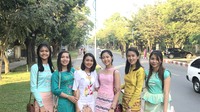
Myanmar women love
Thanakha. They wear Thanakha for a variety of purposes. In the past, in wedding
ceremonies, charity fairs and other social occasions, women wear Thanakha for
beauty. When we hear the word Kun Daung Kaing (village belle), we see, in our
eyes, a beautiful woman wearing circled yellow Thanakha paste on her cheeks and
holding large red bowl with stand. In the ancient days, female farmers wear
Thanakha for sun protection while working in the farm under the hot sun. Our
study shows that their love of Thanakha has not changed in the present days.
Thanakha and other ethnics
One of our notable finding is that other women from minority groups also wear Thanakha.
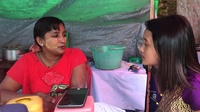
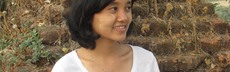
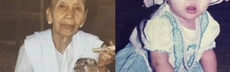
According to our interviewee, she has been wearing Thanakha since she was young. She wears Thankha to get better skin.
Like Myanmar women, they grew up together with Thanakha in thier daily lives and prefer it to any other form of cosmetic.
Therefore,women in Myanmar, regardless of the ethnicity, are still fond of Thanakha.
According to our interviewee, she has been wearing Thanakha since she was young. She wears Thankha to get better skin.
Like Myanmar women, they grew up together with Thanakha in thier daily lives and prefer it to any other form of cosmetic.
Therefore,women in Myanmar, regardless of the ethnicity, are still fond of Thanakha.
The use of Thanakha as a cosmetic by Myanmar women has some changes. It has been largely affected by the appearance of ready-made Thanakha and a variety of modern cosmetics in the market. Our study shows that when Myanmar women go outside or to social occasions, some wear make-up while some wear both thanakha and make-up, applying the make-up first and then, thanakha on it. This is caused by peer pressure.
Thanakha and Men
According to our
findings, thanakha is not men’s object. Although they have worn thanakha since
their childhood, in their adulthood, they wear it thinly. Moreover, they do not
wear it in the social occasions. Unlike women, they prefer ready-made for it is
easy to use and save time and energy. However, before they use ready-made
thanakha, they used to grind thanakha bark. Like women, they do not wear
thanakha when they go to social occasions. They mostly wear it when before they
go to bed. They apply ready-made thanakha thinly when they go to university.
Like women, according to our study, their purposes included skin care and acne
treatment. Men’s attitude toward ready-made thanakha is different from women’s.
Background conclusion
Background of Thanakha
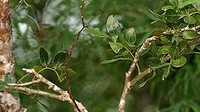
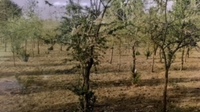
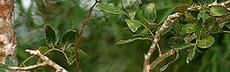
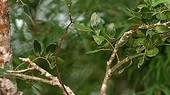
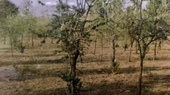
Thanakha, biologically known as Hesperethusa crenulata or Naringi crenulata, is grown in tropical zones of India,Myanmar and Thailand in Southeast Asia. (Thar Hla, 1974. Myanmar people have used it for over 2,000 years. (Seiverling EV etal). A Thanakha tree has flowers, fruits and leaves. Thanakha Pwint (Thanakha flower) blossom in Tagu and Kason and Thanakha fruits bear in Wagaung and Tawthalin. Thanakha fruits are green before maturity and after maturity, it turns light green. When it ripe, it changed into light yellow. Thanakha seeds gained from Thankha fruit is light yellow, too. Thanakha leaves are dark green (Thar Hla, 1974). Saplings are transplanted in a field. (Pauk Pauk, 2016). After seven or eight years, it can be sold. After a Thanakha tree has been logged, it can be logged again only after another 6 years.
Thanakha can be used for a variety of purposes. Its leaves and fruits can be used as medical herb. Leaves are compounded in the medicine to treat epilepsy. Leprosy can be treated by taking a bath with boiled water of Thanakha Leaves. Drinking the boiled water of Thanakha leaves, served with salt, is a good treatment to fever (Pauk Pauk, 2016). It is an antidote for poison, too. It can also be used to treat high temperature (Pauk Pauk, 2016). Thanakha bark is mainly used as cosmetics. A recent study has supported the use of Thanakha for sun protection, reducing rhytids, skin cooling and lightening. Moreover, it is also supposed that Thanakha probably had anti-acne impact. (Seiverling EV, et al. 2017)
Thankha has a long tradition of usage in Myanmar. It is supposed that women had applied Thankha since Sri Ksetra and Visnu periods (Thar Hla, 1974, p. 9). There were legends on Thanakha in successive periods, too (Thar Hla, 1974, pp. 10). Moreover, Thankha is an object of traditional poems and songs. According to an Aingjin (a Myanmar folk music), entitled Thoung Daung Ain, sent by Banyar Nwe’s wife to him, it can be known that Thanakha is a daily-used object of women. Ven. Mahar Rahta Thara, a famous poet of Inwa period, has included Thanakha in his classic Buridat Zat Paung Khan Pyo (Thar Hla, 1974, p. 11). A traditional folklore said that a woman wearing Thanakha is the most gorgeous. In addition, Taungdwin Gyi U Kyawt, a well-known poet, composed a Tay Htat (a kind of traditional song) on Thanakha entitled Thanakha Bin Bwe (Thar Hla, 1974, pp. 11-13). Another well-known song on Thanakha, Shwebo Thanakha composed by YMB Sayar Tin, appraised Shwebo Thanakha (Thar Hla, pp. 13-14). Therefore, it can be concluded that Thanakha has been valued by Myanmar people for centuries.
Conclusion
Thanakha is one of the most indispensable items in the daily lives of Myanmar women. Myanmar women still value thanakha. Their love of thanakha is mainly motivated by their simply like that has originated in their childhood rather than traditional teachings and customs. In addition, the link between women and thanakha has not changed; they are still inseparable. They have been a popular subject of artist compositions in the successive periods. According to our findings, they symbolize Myanmar culture. Moreover, thanakha is more than a beautification to Myanmar women; it is also herbal. Thanakha is easily accessible to Myanmar women. In fact, the position of thanakha is still strong.
References
-U Thar Hla, Myanmar Thanakha, Yangon,Sar Pay Baik Man Press,1974
-Pauk Pauk, Myanmar
Taungthugyimyar Jouranl ( The Journal of Myanmar Farmer), “Say Batwin Myanmar Thanakha Akyaung Thikaung Sayar( The Knowledge for the medical use of Myanmar Thanakha)”, vol.14, part. 207, July 11-17,2016.
-Interviewees
Ma Mya Pwint Nu ( University Student)
Ma Phyu Sin Khaing (University Student)
Mg San Pyae Htet ( University Student)
Mg Kyaw Soe Han( University Student)
Daw Aye Nwe( office staff)
Daw Than Than Khine (Shopkeeper of Thanakha)
-Pauk Pauk, Myanmar
Taungthugyimyar Jouranl ( The Journal of Myanmar Farmer), “Say Batwin Myanmar Thanakha Akyaung Thikaung Sayar( The Knowledge for the medical use of Myanmar Thanakha)”, vol.14, part. 207, July 11-17,2016.
-Interviewees
Ma Mya Pwint Nu ( University Student)
Ma Phyu Sin Khaing (University Student)
Mg San Pyae Htet ( University Student)
Mg Kyaw Soe Han( University Student)
Daw Aye Nwe( office staff)
Daw Than Than Khine (Shopkeeper of Thanakha)
Thanakha and Modernity
Thanakha and Modernity
Thanakha and Popular Culture
Thanakha and Traditional Beliefs
Thanakha and Traditional Usage
Thanakha and Traditional Teachings
Thanakha and Gender
Thanakha and Women
Myanmar Women and Access to Thanakha
Thanakha and Gender
Thanakha and Market
Economy
History of Thanakha
Conclusion
Scroll down to continue
Swipe to continue
Swipe to continue

















 Thanakha and Modern Myanmar Society